ServicesWindow Detailing
Exterior Window Detailing in Troy
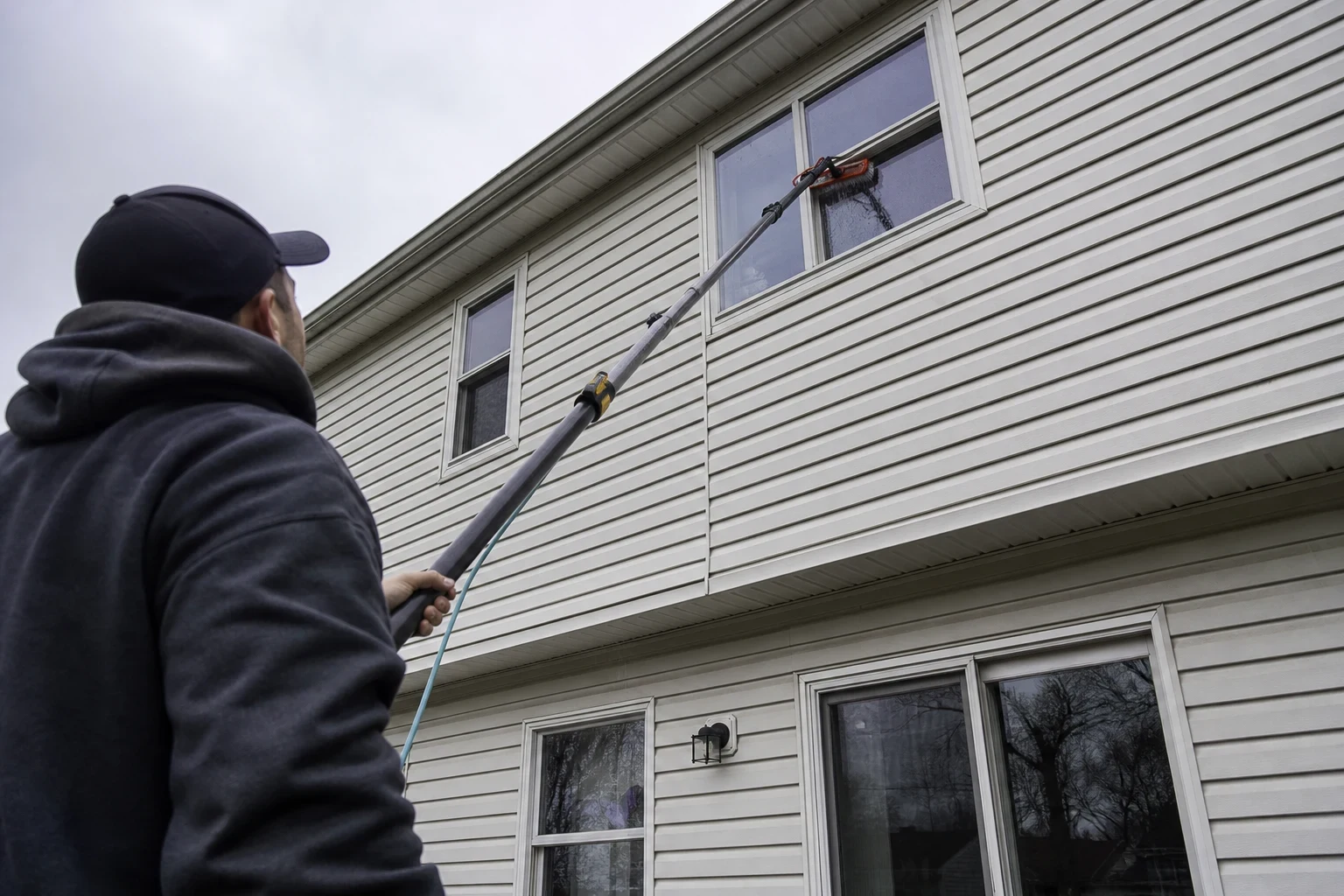
We clean the outside of your windows by hand: glass, frames, sills, tracks and screens. We match the method to the glass, so coated and older panes come out clear without scratches, streaks or water spots left behind.
What Exterior Window Detailing Covers
Outdoor glass collects more than dust. Spring pollen bonds to the surface when it gets damp. Winter road spray leaves a salty gray film. Rain running off a roof or gutter carries grit and minerals that dry into spots. A quick hose rinse moves that grime around, and once dry, the minerals etch in deeper with each cycle.
We break that film down with a mild solution, lift it with a strip washer and pull the glass dry with a squeegee. Then we detail the edges and wipe the frames and sills so dirty water does not run back onto finished panes. Many homes around Troy still have double-hung sashes with aluminum storm windows, and we do both layers where they can be reached from outside.
What We Do on Every Window
- Glass washed and squeegeed
- Each pane gets a strip washer and a squeegee pass, then a lint-free detail cloth along the gaskets and corners where streaks usually start.
- Frames and sills wiped
- Vinyl, aluminum and painted wood frames are wiped down. Sills get cleared of grit and dead insects so runoff does not streak the glass after the next rain.
- Screens brushed and rinsed
- We pop screens out, brush the mesh, rinse it, and let it dry before we reinstall it. A clogged screen makes clear glass look hazy from inside.
- Storm windows handled
- On homes with exterior storm units, we do the outer face of the storm panel. If the storms are already open, we do the prime window behind them too.
- Safe methods for coated glass
- Low-E coatings and tempered glass scratch easily under a dry razor blade. We only scrape where the glass type allows it, and we never use a blade on a coated surface.
Signs Your Windows Need Proper Attention
White spots that rain will not rinse off
Those are mineral deposits from sprinklers or roof runoff. Left alone, they slowly etch the glass surface.
A yellow-green haze each spring
Pollen turns sticky in morning dew and dries into a film that dulls the view and blocks sunlight.
Gray streaks below the frames
Old aluminum frames and storms oxidize. Each rain washes that chalky residue down across the glass.
Glare that looks foggy at sunset
Low sun shows every smear. If the glass looks milky when light hits it at an angle, the film has built up.
Screens that look dark from inside
Dust and cottonwood fluff pack into the mesh and cut airflow when the windows are open.
How a Visit Runs
- 1
Quote by phone
Tell us how many windows you have, how many stories, and whether you have storms or divided lites. We give you a clear quote, and if the house is unusual, we look it over first.
- 2
Setup and protection
We set ladders on stabilizer feet and padded standoffs so nothing rests on your gutters or siding. Drop cloths go down where water could reach plantings or porch floors.
- 3
Screens off, glass washed
Screens come out first and get brushed and rinsed while we work on the glass. Each pane is washed, squeegeed, and detailed at the edges.
- 4
Walk-around before we leave
We check each window in daylight from outside and fix any streak on the spot. Then we put the screens back in and collect our gear.
What Moves the Price
Exterior glass work is priced by the window and the effort each one takes, not by a flat house rate. Two homes with the same square footage can differ widely if one has more panes or harder access. You get the full number by phone before anything is booked.
- Pane count and style
- A divided-lite window with twelve small panes takes far longer than a single large pane. Storm windows add a second surface.
- Height and access
- Second- and third-story glass, steep porch roofs, and windows behind shrubs need more ladder setup and time.
- Condition of the glass
- Heavy mineral spotting, paint overspray, or leftover construction residue needs extra steps beyond a standard wash.
- Screens and extras
- Screen and track work are counted per window, so you decide how much of the detail work you want.
Questions About Exterior Glass
Something not covered here? (518) 832-5989
Do you do the inside of the windows too?
Our work is on the outside of the home: exterior glass, frames, sills, and screens. That is where weather, pollen, and runoff do the damage, and it is the part most people can't safely reach themselves.
What happens if it rains right after you finish?
Clear glass sheds rain much better than dirty glass, because there is no film for water to cling to and dry into spots. Rain does the most harm when it lands on grime or mineral buildup. We do not work in steady rain, and we reschedule if a storm rolls in.
Is it safe to have your crew on ladders at my house?
Yes. We are licensed and insured, and we have been in business for 5 years. We use standoffs and stabilizers so ladders never lean on gutters or glass, and we keep them off soft garden beds.
How often should exterior windows be done?
For most homes, once in late spring after the pollen drops is a good baseline. A second visit in fall clears summer dust before winter road salt starts to build up. Homes near busy roads or under trees may need it more often.
I have permanent lighting on my roofline. Can you work around it?
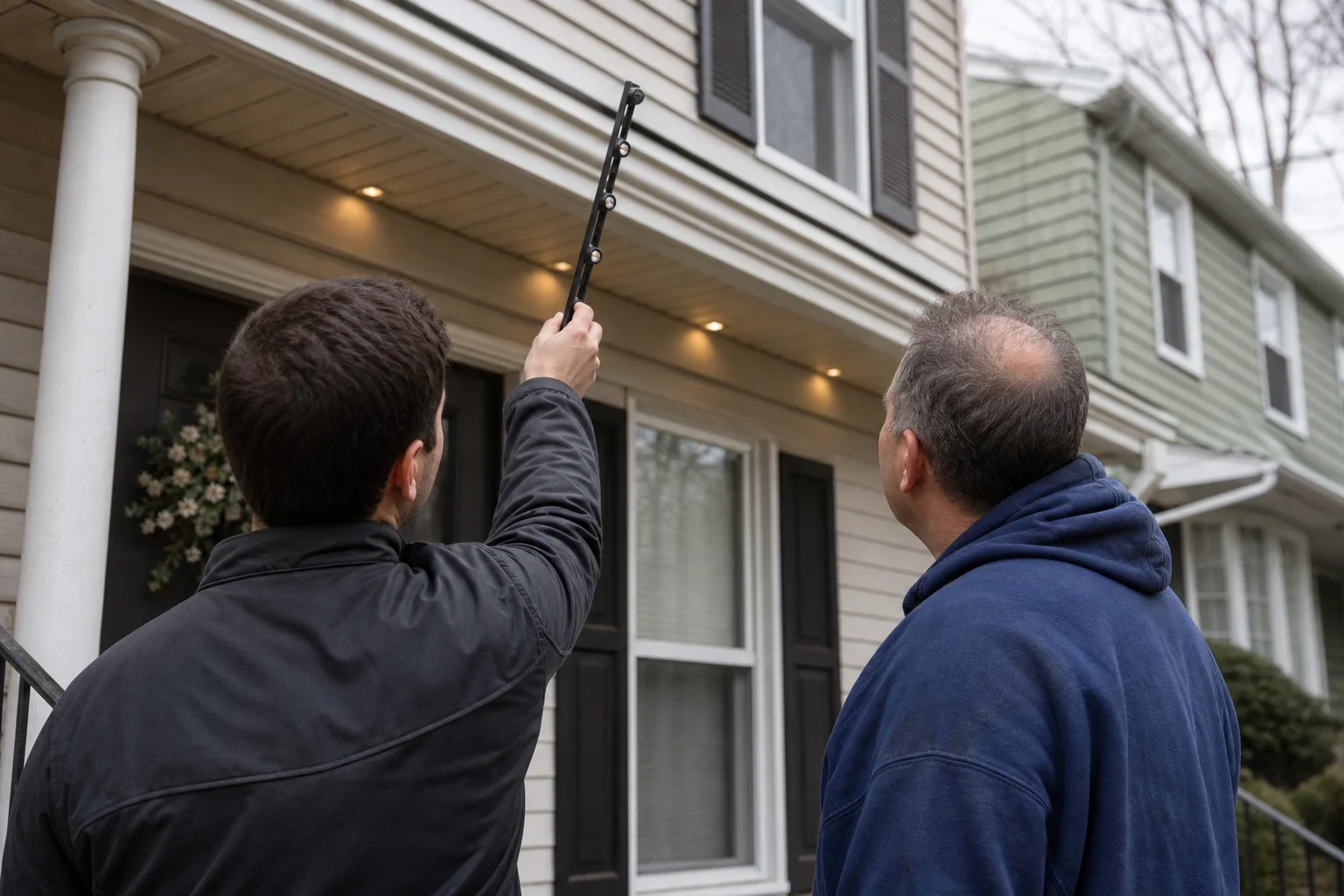
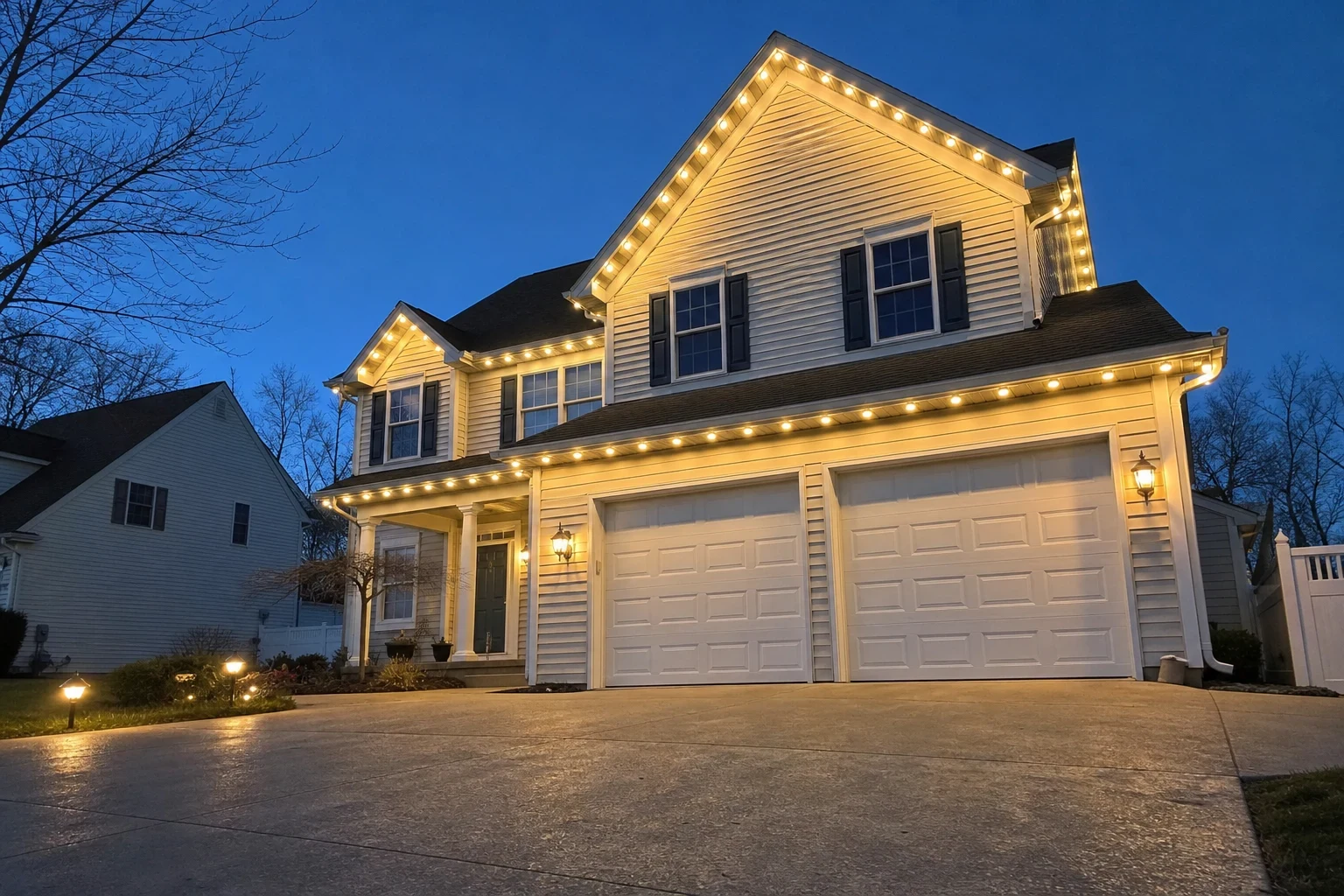
Yes. We are an authorized Gemstone Lights installer, so we know how that track mounts under the eaves. We place ladders so they do not press on the channel or wiring.
See Clearly Through Every Pane Again
Tell us your window count and the number of stories, and we will give you a clear number before anything is scheduled. No ladders lean on your gutters, and screens go back in fresh.