ServicesRoof Treatments
Roof Treatments in Troy, NY
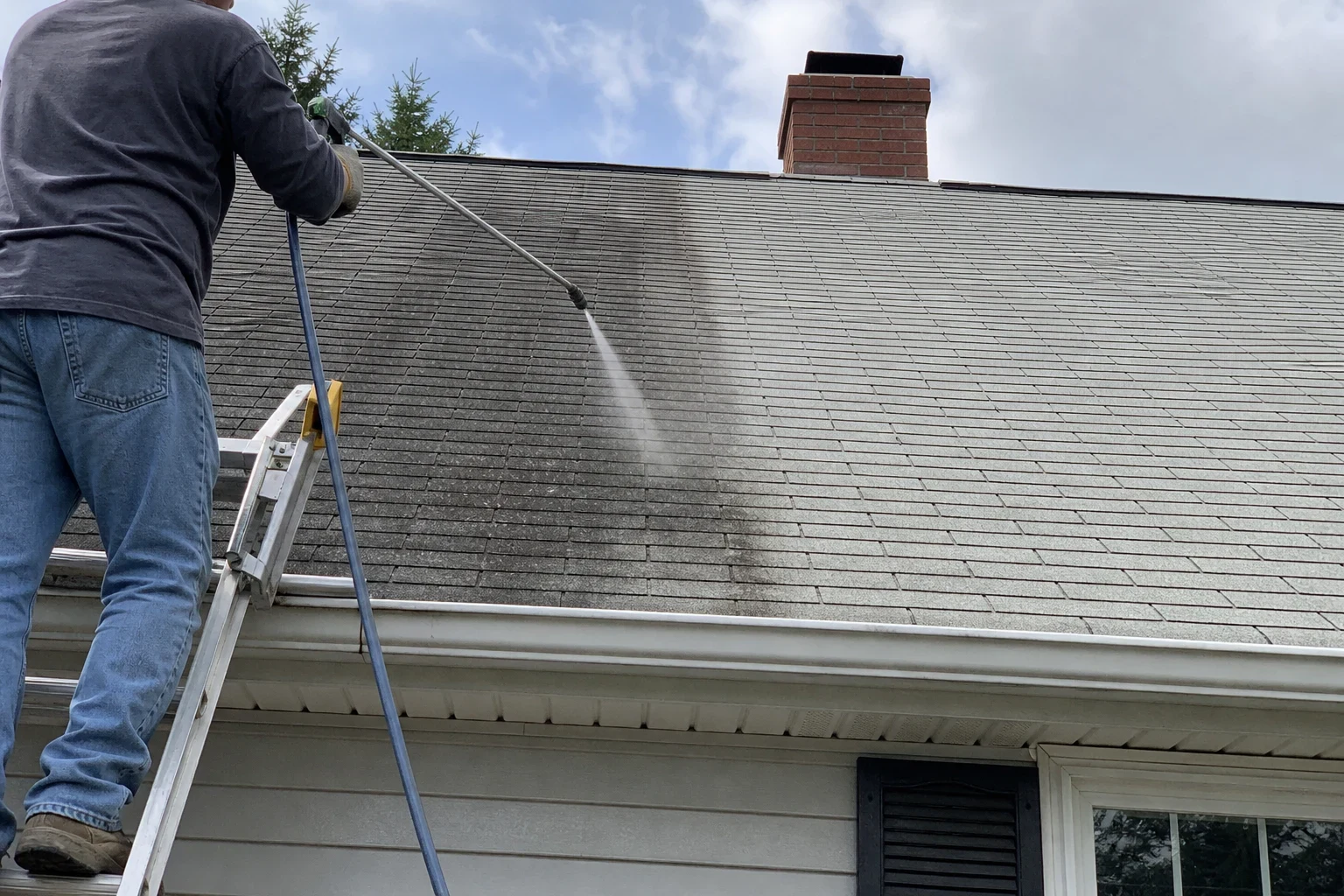
Those black streaks and green moss patches are living growth, and they keep spreading until something kills them. We apply a low-pressure treatment that stops algae, moss and lichen at the root, protects the granules on your shingles and leaves your landscaping intact.
What a roof treatment does and when it makes sense
The dark streaks running down most asphalt roofs come from Gloeocapsa magma, a cyanobacteria that feeds on the limestone filler in shingles. Moss and lichen follow, holding moisture against the surface and lifting shingle edges. Left alone, they shorten the life of the roof and drag down curb appeal.
The treatment itself is a liquid mix sprayed on at about the flow of a garden hose, and it kills the growth at its anchor points. Because nothing is blasted or scrubbed, the protective granules stay bonded to the shingle. Over the following weeks, rain rinses away the dead algae and loosens the moss.
It is the right call when growth is on the surface and the shingles underneath are still sound. Around Troy, shaded north-facing slopes and long, damp springs keep that growth coming back, so a treatment that also slows regrowth is worth more than a one-time fix.
What's included in a roof treatment
Ground and ladder inspection
We look at shingle condition, flashing and how far the growth has spread before anything is applied. If we see curled tabs or bare spots, we tell you, because a treatment will not fix a failing roof.
Plant and surface protection
Shrubs and beds below the drip line are pre-wet and covered where needed. That keeps runoff diluted and away from roots and foliage.
Low-pressure application
We spray at roughly garden-hose flow and coat every affected course. High-pressure equipment never goes on the shingles.
Targeted moss and lichen work
Thick moss mats and lichen colonies get a heavier, direct application. Lichen grips hard, so we let the treatment loosen it rather than pry it off and tear the shingle.
Photos and a plain report
You get before photos and a short rundown of what we saw on the roof, including anything you may want a roofer to look at.
Signs your roof needs a treatment
- Black or gray streaks
- Vertical stains running down from the ridge are algae colonies. They show first on slopes that stay damp longest.
- Green moss along shingle edges
- Moss grows into the gaps between tabs and wicks water upward. Over a few freeze-thaw cycles, that trapped water can lift and crack shingles.
- Crusty spots that will not wipe off
- Gray-green or white rosettes are lichen. They root into the granule surface and keep growing slowly for years.
- Granules collecting at the downspouts
- A heavy wash of grit at the downspout outlets can mean growth is loosening the surface. It is worth an inspection before it gets worse.
- Growth on just one side of the house
- If the shaded side looks years older than the sunny side, the difference is usually biological, not age. A treatment evens that out.
How the job day runs
- 1
Quote by phone, then a look at the roof
You call, we talk through what you are seeing and set a time to inspect. You get a free written quote before any work is scheduled.
- 2
Protect the property
We pre-wet and cover plantings, move outdoor furniture away from the drip line and check where runoff will go.
- 3
Apply the treatment
Working from the ridge down, we coat the affected areas at low pressure and give moss and lichen a heavier pass. Most homes are finished in part of a day.
- 4
Rinse plants and walk the site
We rinse the plantings again and do a final walk around so nothing is left behind.
- 5
Let the weather finish it
Algae lightens within days. Moss and lichen release gradually over several weeks of rain, and we explain what to expect so the slow fade does not surprise you.
What affects the price of a roof treatment
Every quote starts with the roof itself, not a flat rate. We price after we have seen the slope, the size and how much growth is on it. The quote lists what is covered so there are no add-ons on the day.
- Roof size and pitch
- A bigger roof uses more product and takes longer to cover. A steep pitch calls for extra ladder and safety setup before the crew can work on it.
- Type and depth of growth
- Light algae streaking takes less than thick moss mats or established lichen, which need heavier application.
- Access around the house
- Tight side yards, decks under the eaves and multiple stories change how we set ladders and protect what is below.
- Landscaping below the roofline
- Dense beds and delicate plantings take more prep and rinsing to keep them protected.
Roof treatment questions
- Will a roof treatment damage my shingles?
- No. It goes on at low pressure and nothing scrapes or blasts the surface, so the granules stay put. Hitting a roof with high-pressure water is what strips granules, which is why we never put that kind of force on shingles.
- How long until the moss and streaks are gone?
- Algae streaks usually start lightening within a few days. Moss and lichen take longer, often several weeks, because they release as rain softens the dead growth. Heavy lichen can take a full season to fade completely.
- Can the treatment harm my garden or my dog?
- Before spraying, we soak the beds below the eaves with clean water, cover delicate plants and steer runoff away from them. When the job is done, everything gets a second rinse. Bring pets indoors while we work and until the roof dries, and we will let you know when it has.
- How often does a roof need treating?
- It depends on shade, tree cover and how long the roof stays damp. Many roofs go a few years between treatments, while heavily shaded slopes need it sooner. We will give you an honest read after the inspection.
- Should I treat the roof before getting permanent lighting?
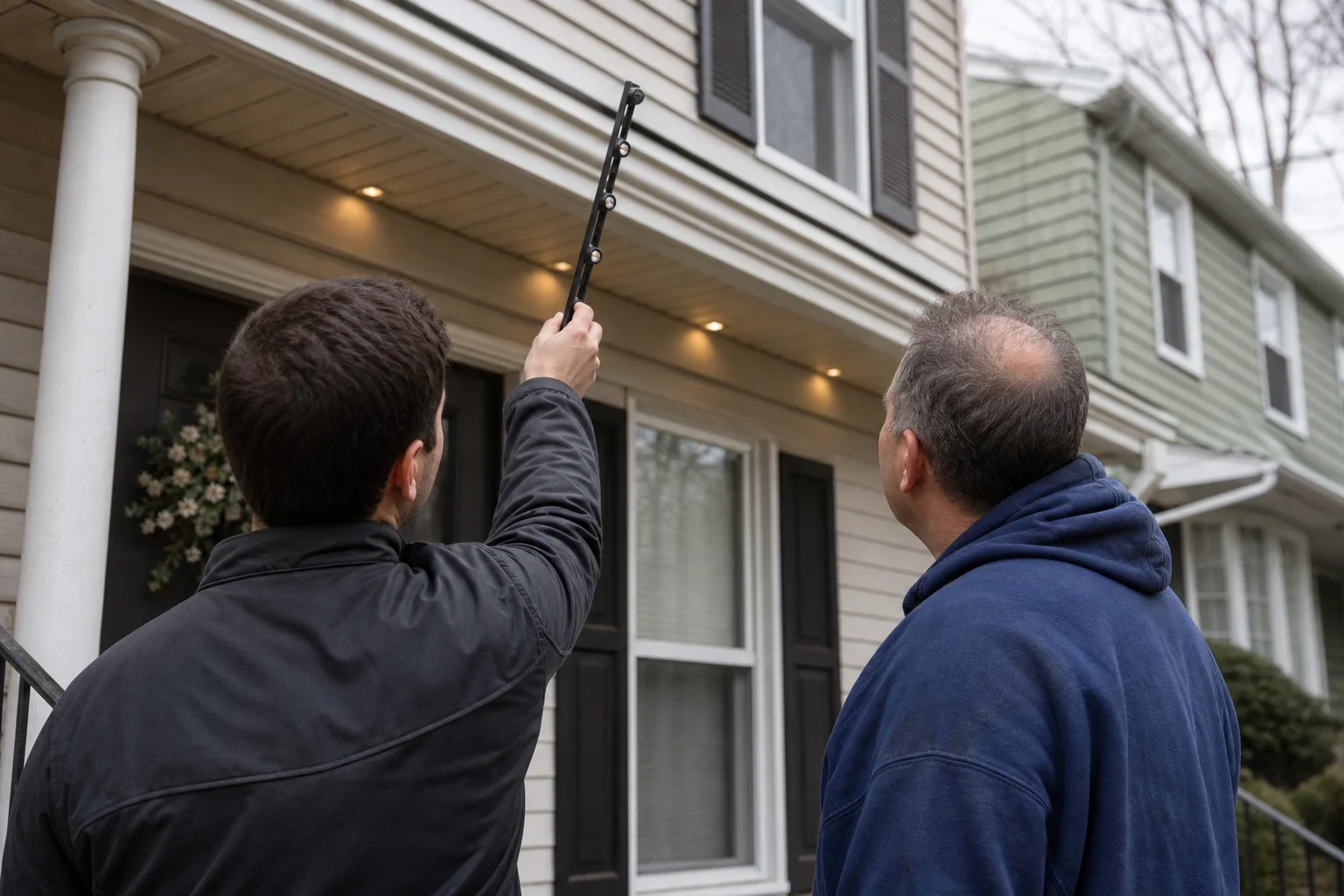
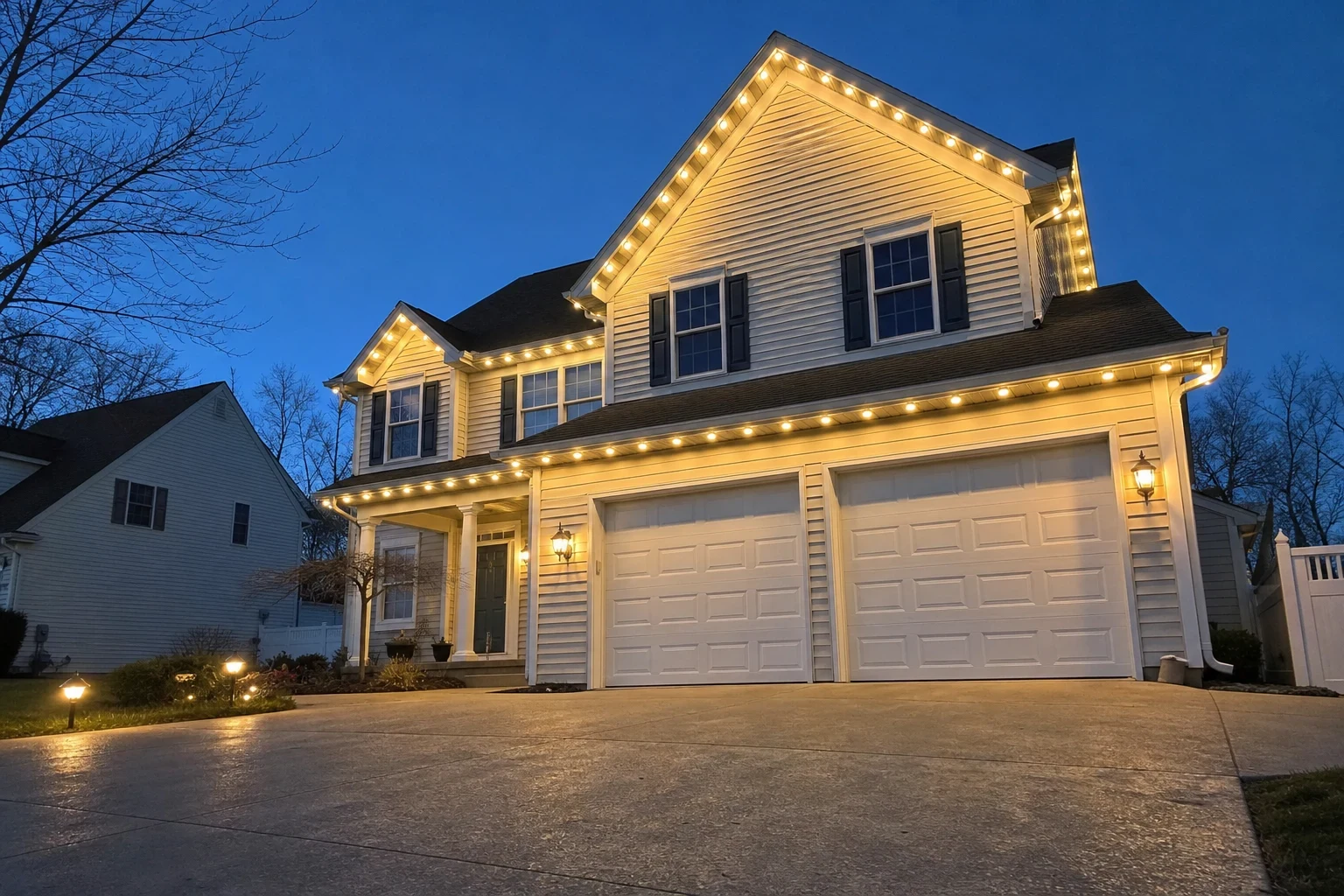
- It is a sensible order. A clean, sound roofline makes for a tidier permanent lighting install, and as an authorized Gemstone Lights installer we can look at both on the same visit if you are planning lights too.
- Who does the work on my roof?
- Our own crew does. We are licensed and insured and have been in business 5 years, and the same people who inspect your roof are the ones who treat it.
Stop the growth before it costs you shingles
Tell us what you are seeing on your roof and we will set up an inspection. You will know what it needs and what it costs before anything is scheduled.